The Mechanics of Pneumatic Splinting
Continuous Positive Airway Pressure (CPAP) remains the gold standard for Obstructive Sleep Apnea (OSA). Unlike consumer gadgets, CPAP physically forces the airway open using a calibrated column of air. This prevents the pharyngeal collapse that causes hypopneas and apneas.
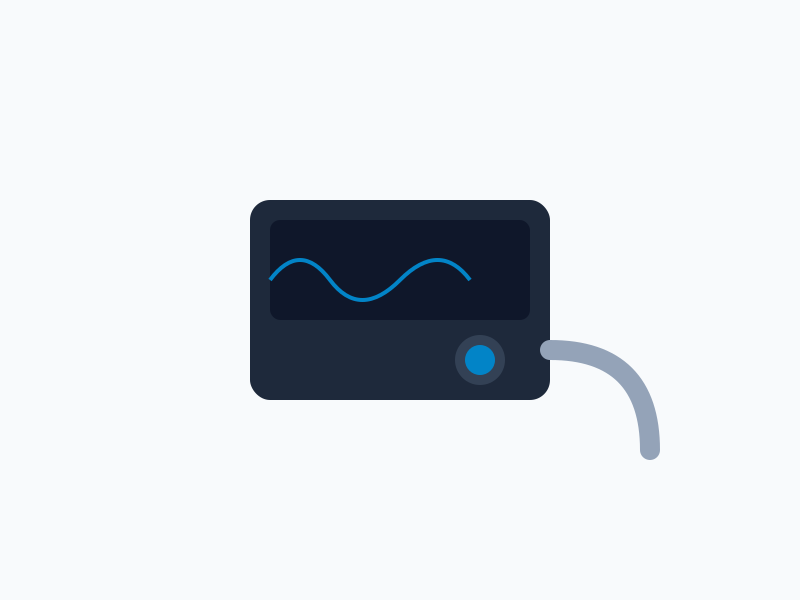
Fixed vs. Auto-Titrating (APAP)
While traditional CPAP delivers a fixed pressure (e.g., 10 cmH2O), Auto-CPAP (APAP) dynamically adjusts pressure breath-by-breath based on algorithmic detection of flow limitation, snoring, and apneas. However, APAP algorithms are proprietary and can sometimes lag behind rapid respiratory events, causing micro-arousals.
Understanding Your Efficacy Data
- AHI (Apnea-Hypopnea Index): The number of events per hour. Target is typically < 5.
- Leak Rate: High leak rates compromise therapy. Differentiate between intentional leak (venting CO2) and unintentional leak (mask seal failure).
- 95th Percentile Pressure: In APAP mode, the pressure the machine stayed at or below for 95% of the night. Often used to set fixed CPAP pressures.
For a deep dive into portable machines, see our Travel CPAP comparison.